

Kinesis Réadaptation

Welcome

Cardiology & vascular medicine

Cardiology

Assessment and follow-up of heart disease, high blood pressure, coronary disease and heart failure.

Area 01ConsultationKeur Gorgui · Dakar
Book an appointment
Illustration of cardiologyService illustration
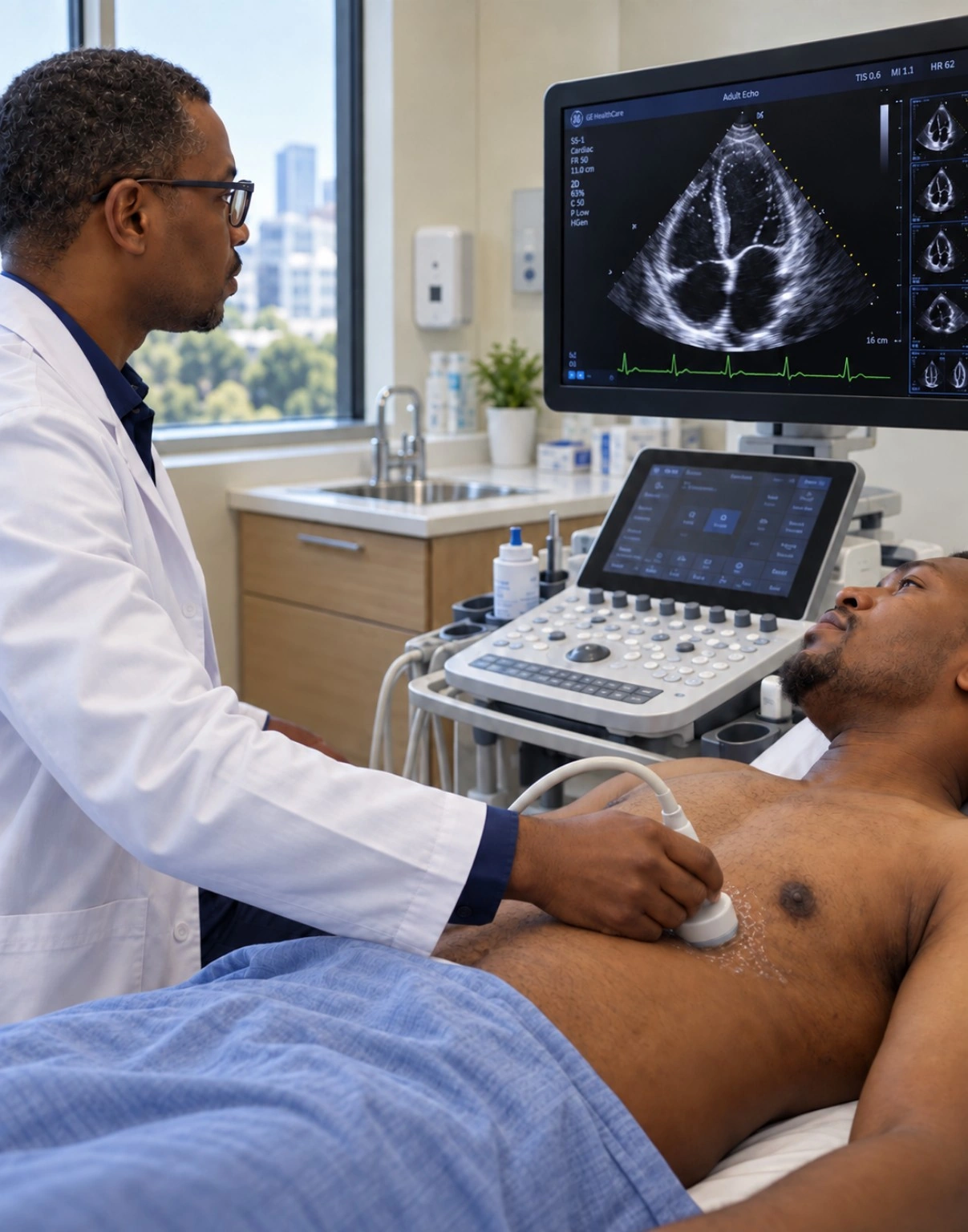
Cardiac ultrasound examination
EchocardiographyAssessment of the heart’s structure and function
Illustration of a correct blood pressure measurement
ECGRecording the heart’s electrical activity
01

Overview

What is this service for?

Cardiology focuses on how the heart works and on the prevention, diagnosis and follow-up of cardiovascular disease.

02

When should you seek advice?

  • chest pain or discomfort
  • unusual shortness of breath
  • palpitations
  • high blood pressure
  • fainting or loss of consciousness
  • swelling of the legs
03

Key points

Concrete guidance to understand the service

  • Around 120/80 mmHg is a common normal resting reference; persistent clinic readings of 140/90 mmHg or above need assessment.
  • Sudden chest pain, severe breathlessness or a prolonged faint requires urgent evaluation.
04

What this service can help with

01

Assess heart function

02

Identify cardiovascular risk factors

03

Monitor a known heart condition

04

Guide useful additional tests

Important information

This information is general and does not replace a medical consultation. A healthcare professional will determine the assessment or test suited to your situation.

Frequently asked questions · Cardiology

Useful answers before requesting advice

Short, practical information based on the service details above.

What is this service for?

Cardiology focuses on how the heart works and on the prevention, diagnosis and follow-up of cardiovascular disease.

When should you seek advice?

Common reasons include chest pain or discomfort, unusual shortness of breath, palpitations, high blood pressure. A healthcare professional will assess whether this service is appropriate for your situation.

What useful guidance should I know?

Around 120/80 mmHg is a common normal resting reference; persistent clinic readings of 140/90 mmHg or above need assessment. Sudden chest pain, severe breathlessness or a prolonged faint requires urgent evaluation.

What can this service help with?

Assess heart function; Identify cardiovascular risk factors; Monitor a known heart condition.

Need help?

Our team can guide you.

WAWhatsApp