
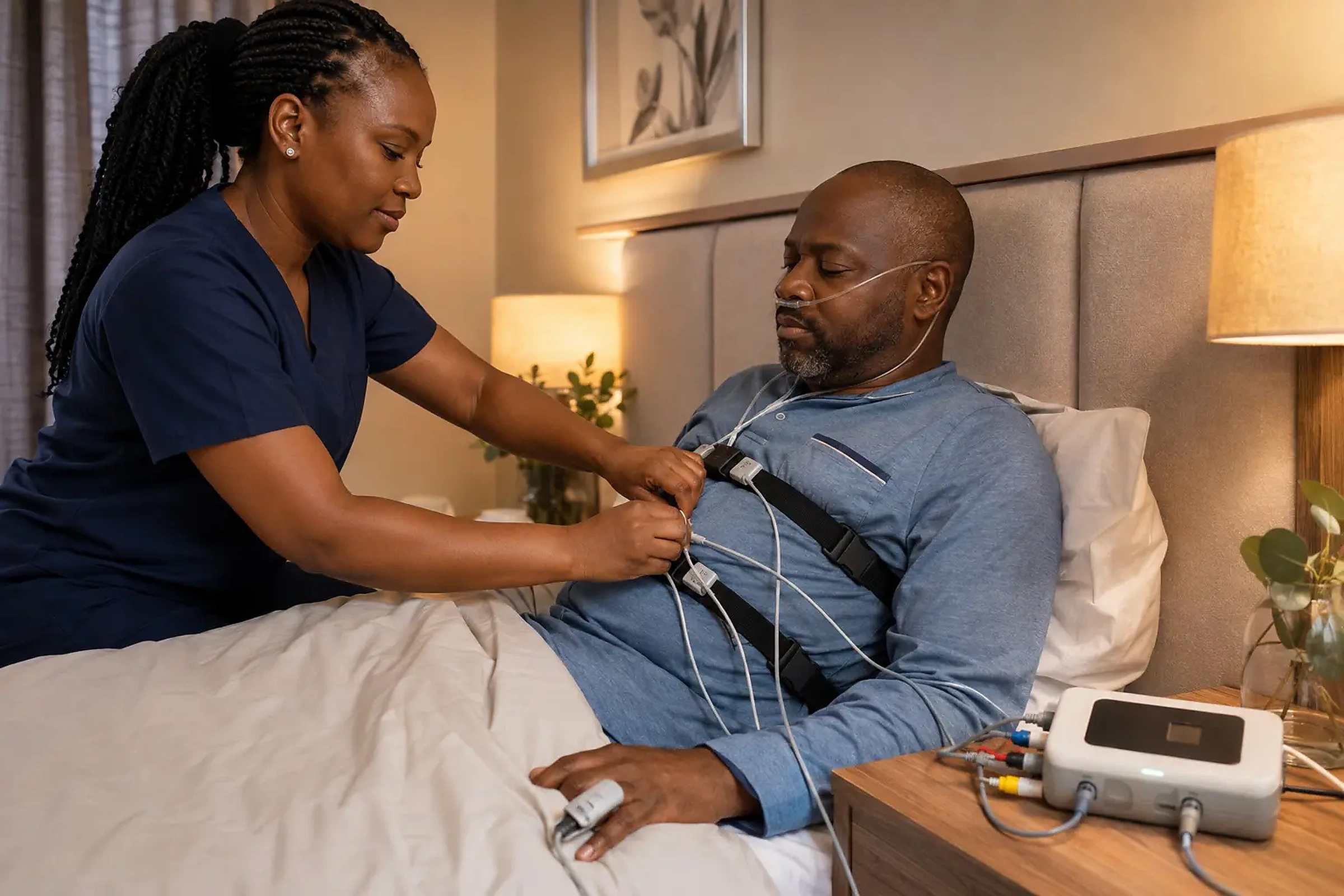
Obstructive sleep apnoea causes repeated pauses or reductions in breathing during sleep. Rest becomes fragmented and less restorative, often without the person noticing.
Signs to look out for
- Loud, regular snoring
- Breathing pauses noticed by a partner
- Morning fatigue or headaches
- Daytime sleepiness, irritability or poor concentration
Why these signs matter
Untreated sleep apnoea can impair alertness and is associated with cardiovascular risk. If you struggle to stay awake, avoid driving and seek medical advice.
What is respiratory polygraphy for?
The test records several breathing signals during sleep, including airflow, respiratory movements and oxygen levels. Results are interpreted alongside symptoms and clinical context.
A useful step
Write down your symptoms and, if possible, what a partner notices at night. This helps the clinician decide whether sleep testing is useful.
Medical sourcesNHLBI — Sleep apnea
General information only. It does not replace medical consultation or diagnosis.